RAN-COR-IOUS-A-TIVE: the act of being overly hateful
ZEAL-ISH-IN-MENT- The epitome of happiness
Monday, April 4, 2011

Friday, March 25, 2011
So-H-R-abv
Names; Now isn’t this a touchy topic? Let’s face it, when it comes down to names most of you will have you name pronounced wrong majority of the time. Same goes with my name. For years now, I have not met many people who can pronounce my name correctly. After years and years of mispronunciation, sometimes we just go along with what others call us. Well now I will guide u step by step on how to actually pronounce my name. My name is Sourov. Most of you will pronounce it as SOUR-OV, or even SO-OR-OV, well that is not even close to how my name should be pronounced. My name is pronounced So-H-Ra-abv. Let me break it down even further. You start with a hard “S” sound as in snake. SSSS, followed by the O sound as is OH. You bring the S sound and the OH sound together you get SO. The we follow the SO sound by a aspirated H sound, like a huh sound. So you get So-H(aspirated) then you add the last component of the name which is Ra-bv. What you have here is somewhat of a trill “R” sound like you would have in Spanish. Like what you get in the Spanish word “Pero”. So now you have So-H-RRR. The final component of my name is the ABV sound. Which is self explanatory, where you have the beginning sound in OBVIOUS, but you replace the O with an A, and put slight emphasis on the A sound, like Aabvious. So the final equation of this formula gives you my name. So-H-R-abv |
The Book I Chose
The Book which I chose to do my presentation on is, Laughing Without an Accent, by Firoozeh Dumas. Dumas is an Iranian American, balancing two very different cultures trying to sustain harmony amongst them. The book is a memoir about the experiences Dumas had to go through being an Iranian American. Dumas gives us an invitation to try and comprehend a clash of two totally different cultures, by giving us a walk though of her life. She explains the hardships and the humor in American traditions and Iranian Traditions. I chose this book because it gives me something to relate to. The Iranian culture and my native culture are very similar. Many of the issues she had to face growing up, I had to go through as well. Dumas gives us a lighthearted depiction of first and second generation immigrants, coming to America and being befuddled by the customs, rituals, and rites of this great country. I see her struggles as an outlet for many immigrant families and individuals, who are currently in this very day and age, going through the mixture of cultures, and living in New York gives me firsthand experience to what she is talking about. New York is like Globalization in its essence. It is here where all the world’s cultures come and meet, to exchange ideas, principles, and beliefs. I look forward to reading this book and actually debunking many problems us “foreigners” have growing up in a distant land |
The Book which I chose to do my presentation on is, Laughing Without an Accent, by Firoozeh Dumas. Dumas is an Iranian American, balancing two very different cultures trying to sustain harmony amongst them. The book is a memoir about the experiences Dumas had to go through being an Iranian American. Dumas gives us an invitation to try and comprehend a clash of two totally different cultures, by giving us a walk though of her life. She explains the hardships and the humor in American traditions and Iranian Traditions. I chose this book because it gives me something to relate to. The Iranian culture and my native culture are very similar. Many of the issues she had to face growing up, I had to go through as well. Dumas gives us a lighthearted depiction of first and second generation immigrants, coming to America and being befuddled by the customs, rituals, and rites of this great country. I see her struggles as an outlet for many immigrant families and individuals, who are currently in this very day and age, going through the mixture of cultures, and living in New York gives me firsthand experience to what she is talking about. New York is like Globalization in its essence. It is here where all the world’s cultures come and meet, to exchange ideas, principles, and beliefs. I look forward to reading this book and actually debunking many problems us “foreigners” have growing up in a distant land |

The Book which I chose to do my presentation on is, Laughing Without an Accent, by Firoozeh Dumas. Dumas is an Iranian American, balancing two very different cultures trying to sustain harmony amongst them. The book is a memoir about the experiences Dumas had to go through being an Iranian American. Dumas gives us an invitation to try and comprehend a clash of two totally different cultures, by giving us a walk though of her life. She explains the hardships and the humor in American traditions and Iranian Traditions. I chose this book because it gives me something to relate to. The Iranian culture and my native culture are very similar. Many of the issues she had to face growing up, I had to go through as well. Dumas gives us a lighthearted depiction of first and second generation immigrants, coming to America and being befuddled by the customs, rituals, and rites of this great country. I see her struggles as an outlet for many immigrant families and individuals, who are currently in this very day and age, going through the mixture of cultures, and living in New York gives me firsthand experience to what she is talking about. New York is like Globalization in its essence. It is here where all the world’s cultures come and meet, to exchange ideas, principles, and beliefs. I look forward to reading this book and actually debunking many problems us “foreigners” have growing up in a distant land |
Monday, March 14, 2011
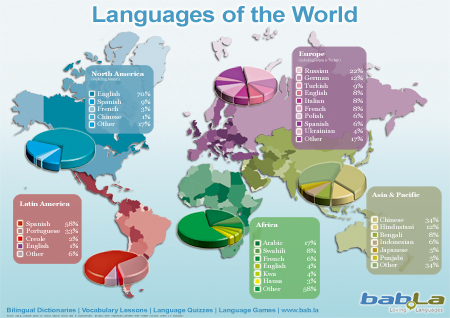

The Journey of Language

Language is
My personal journey started as a baby being born to Bengali parents in the country of Bangladesh. Eventhough my stay in the mother land was short (30 days to be exact); the countries languge would have a huge impact on my linguistic development. My overall development took place in the city of New York, in the United States of America. New York is known as a melting pot of cultures, and here is where the whole world comes, to exchange ideas, thoughts, and even language. There are so many culutures in this city, that every inhabitant of this metropolis are bound to come in contact with different languages some way or some how.
Being of Bengali descent and growing up in America, I grew up not bilingual, but multi lingual. I learned Bengali and English simultaneously along with exposure to Arabic, Farsi, Hindi, and Turkish; due to religious and cultural influences. Bengali and English were regularly used in my household growing up, while the other languages were imposed on me from a very young age. Bengali, and Urdhu are very similar, so the languages are comprehendable to natives of either language. Also Arabic, Farsi and Turkish are some what similar, so these languages are comprehendable to natives of each of these languages.
If one was to ask me how exactly I learned these languages, I wouldnt be able to give them a very factual and accurate response. However, I do have an informed hypothesis. I believe that humans have an enhanced learning period from the ages of 1 to 5, where they can capture things quite easily and embed it in their minds. I beleive children associate words to objects or actions, and after hearing the words regardless of language, and seeing what action or object it refers to, they learn it. After doing this throughout the early childhood of a human, they subconciously learn the language, and it becomes something of a second nature to them. Statistics actually do prove that the human mind is more capable of learning things at a young age, compared to learning at a more advanced age. The reason lies in the capacity of the human brain, and also many external factors due to enviromental and habitual issues.
It is human nature to always question everything. My questions about language revolve around the birth of it. How it came to be, what was the first language, who spoke it, where it came from and many more. After reading Guy Deustcher's article of language, im filled with even more questions. He sets forth a theory, that the language one speaks, actually affects on how a person percieves the world, and actually thinks. Relating the theory to Australian Gugu Yimithirr language, from the north of Queensland, he explains how natives of this language have different directional concepts than the average speaker of English. The speakers of Gugu Yimithir rely on somewhat of a compass like sense of direction. Where as us English speakers, would refer to something being to the left, right, forward or behind; the Gugu Yimithirr refer to these things as East, West, North and South. Never would I ever assume that language would have an impact on the actual way we think. If this true, then many answers we have about the human mind, can be answered. For example Germans have a very coarse and rough language, in essence the stereo type of Germans, is that they are a very coarse and rough group of people. This can be said about many people and their language. It is like saying, you are what you speak.any system of formalized symbols, signs, sounds, gestures, or the like used or conceived as a means of communicating thoughts or emotions. Every indiviudal embarks on their own personal journey of language, starting from birth we exposed to language, and our travels dont end till we have departed this world.
Subscribe to:
Posts (Atom)